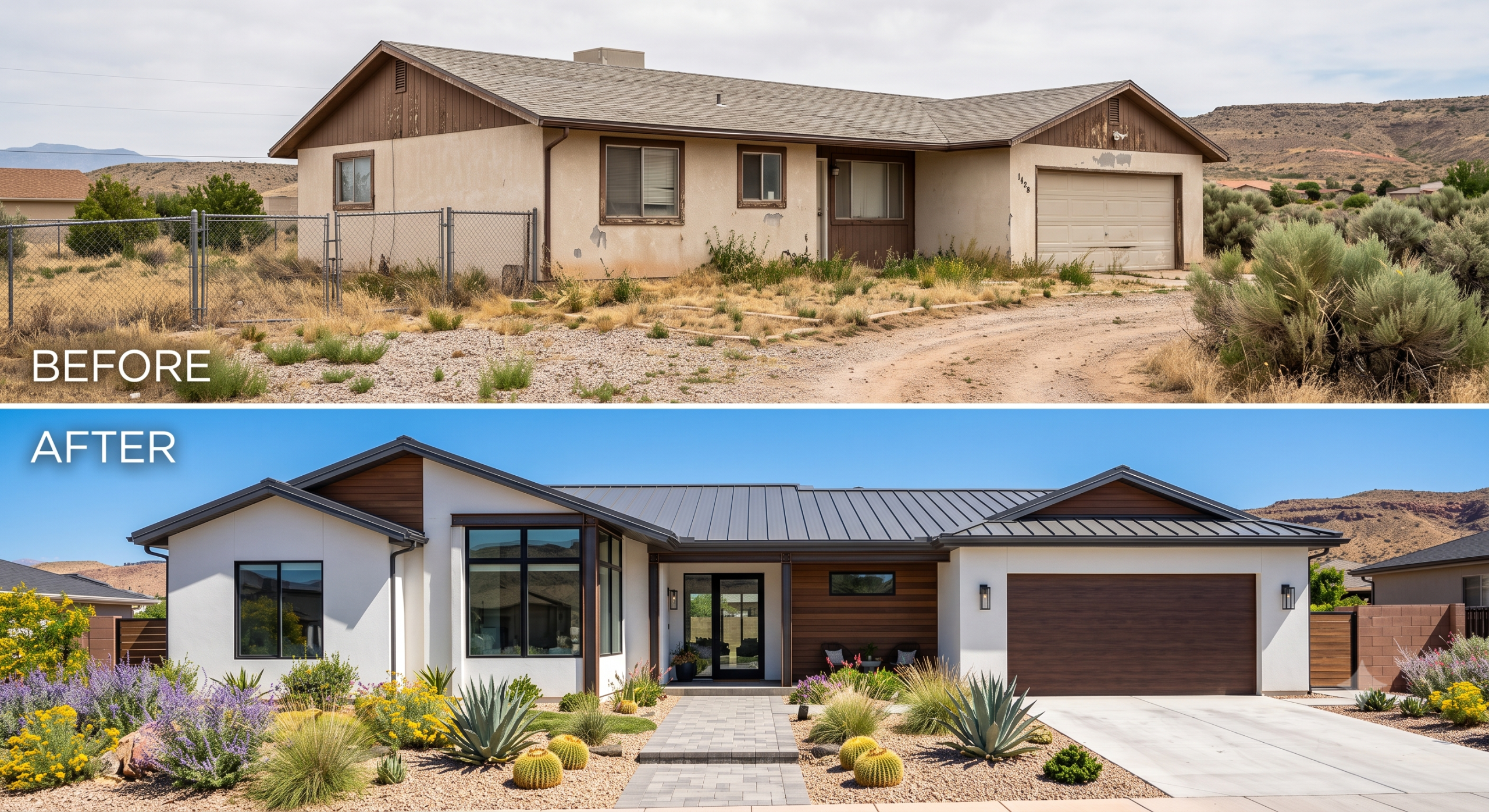
Traditional mortgage routes don't always work for every situation, especially if you need fast financing…
Private Money Loans Explained: When I Recommend Alternative Lending Solutions
Traditional mortgage financing doesn’t always work for every scenario, and that can be frustrating—especially if your timeline is tight or your income isn’t W-2 standard.
Private money loans are alternative mortgage solutions offered by private lenders, rather than banks or credit unions, designed for situations where conventional loan options don’t fit your needs.
In this article, you’ll learn what private money loans actually are, when I suggest them over traditional loans, and what borrowers in areas like St. George, Hurricane, and throughout Washington and Iron County should know before getting started.
Key Takeaways
- Purpose: Private money loans provide fast access to funds when bank financing isn’t an option.
- Requirements: Approval often depends more on property value and exit strategy than personal credit or income.
- Timeline: Closings can occur in days rather than weeks or months.
- Best For: Real estate investors, self-employed borrowers, or anyone needing flexible or time-sensitive solutions.
Quick Answers: Private Money Lending FAQs
- How are private money loans different from bank mortgages? They’re funded by individuals or private companies, not banks, with simpler approval and fewer documentation requirements.
- What types of borrowers use private money loans? Typically, real estate investors, self-employed clients, or buyers seeking fast closes or non-traditional underwriting.
- Are rates and fees higher with private money? Generally, yes—rates and fees are usually higher than conventional loans due to increased risk for lenders.
- Is down payment required? Most private lenders want significant equity or down payment, often at least 20-30%, but specifics vary by scenario.
What Is a Private Money Loan?
A private money loan uses funding from an individual investor or a private lending group, rather than from a bank or credit union. The core idea is asset-based lending: approval is primarily based on the value and potential of the property (the “collateral”), along with your exit strategy—how you’ll repay the loan or refinance—rather than solely on your personal debts, credit, or tax-return income.
At Ryan Bolton (NMLS# 299717), I occasionally recommend private money solutions for local borrowers in Washington County, St. George, and the surrounding areas when traditional loan programs don’t fit the situation or timelines are too tight.
Common Uses for Private Money in Southern Utah
- Investment property flips, including short-term renovations and resale
- Bridge loans for purchasing a new home while selling an existing property
- Acquisitions where speed is critical—auction or distressed sales in high-demand areas like Entrada, Desert Color, or Springdale
- Borrowers with irregular income, self-employed, or not meeting “standard” mortgage guidelines
- Unique property types or scenarios that major banks avoid
How Private Money Works—Step by Step
- Identify the Property and Purpose: Know your target property and what you need the loan for (acquisition, rehab, bridge, etc.)
- Secure a Private Lender: This can be a local investor, lending group, or professional private lending company.
- Property Analysis: The lender will evaluate the property’s current and potential value, often more heavily than your credit profile.
- Review Terms: Private money terms usually involve higher interest rates, upfront points, and shorter loan terms (often 12-36 months).
- Close Fast: Private money can close in as little as a few days, well before typical conventional or jumbo home loan timelines.
- Exit Strategy: You’ll need a clear plan to repay or refinance—like selling a renovated property, or refinancing to a traditional mortgage after the project is complete.
Private Money Loan vs. Bank Mortgage: A Comparison
| Feature | Private Money Loan | Traditional Bank Mortgage |
|---|---|---|
| Approval Based On | Property value, exit strategy | Income, credit score, DTI, documentation |
| Closing Speed | Typically days | Typically 3-6 weeks |
| Loan Term | Short-term (12-36 months) | 15, 20, 30 years |
| Rates/Fees | Higher rates & fees, varies widely | Lower rates & fees in most cases |
| Documentation | Minimal. Focus on property and deal. | Extensive (tax returns, pay stubs, credit, etc.) |
When I Recommend Private Money Loans
There are very specific situations where a private money loan can make all the difference. Here’s when I might suggest considering this route:
- Time-sensitive real estate investments: If you need to close rapidly—say on a bank-owned, auction, or high-demand property around Sand Hollow or Split Rock—a private loan can be the only way to secure that deal.
- Income documentation is tricky: If you can’t document your income the way banks like (common for self-employed or investors), private money allows deals based on property value.
- The property is non-traditional or needs substantial rehab: Many banks won’t finance “fixer-uppers” or unique properties—private money might fill the gap until traditional rehab loan programs or permanent refinancing makes sense.
- You need a bridge loan: Some buyers want to secure a new home before selling their current property. Private funding, or a bridge home loan, can solve that problem—especially in competitive markets near Zion National Park or Desert Color.
- Short-term opportunity: If the goal is to own or renovate for a short period of time, then sell or refinance, private money gives flexibility.
Key Pros and Cons of Private Money Loans
Potential Advantages
- Extremely fast closing process—often measured in days
- Flexible approval when documentation or credit don’t fit traditional boxes
- Enables opportunity for projects and properties that banks avoid
- Sometimes possible to structure creative deals (interest-only, balloon, staged draws)
Potential Drawbacks
- Higher interest rates and lender fees compared to bank loans
- Shorter payoff timelines; most require exit strategy within 1-3 years
- Substantial down payment or equity requirement (rarely true “no money down”)
- Not suited for long-term, owner-occupied financing—usually for temporary or investment-focused scenarios
Alternatives to Private Money Loans
Private lending isn’t always the only alternative. Depending on your situation in Washington County or Iron County, you may also want to consider:
- DSCR loan programs for investment property qualification based on rental income
- Bank statement programs for self-employed borrowers with strong cash flow but non-traditional documentation
- Jumbo home loans for high-value properties
- Traditional bridge or rehab loans if you still have time to document and qualify
Each of these alternatives has unique qualifying standards, timelines, and advantages, so it’s worth comparing your specific goals with the available programs.
Important Tips When Considering Private Money
- Ask about total loan costs: Beyond interest rates, ask about origination points, exit fees, and any monthly servicing charges.
- Get your exit strategy clear: Whether selling, refinancing, or saving for a permanent loan, know how you plan to pay off the private loan before you close.
- Work with a licensed advisor: Rules, limits, and guidelines vary, especially as lending landscapes shift in areas like Kanab, Cedar City, or Santa Clara.
- Understand the risks: Short payoff timelines mean there’s pressure to execute your plan quickly.
Is Private Money Right for You?
Private money loans are a specialty tool—powerful in the right scenario, but not always the ideal solution for every borrower. I’ve worked with clients in Saint George, Apple Valley, and beyond who have successfully leveraged these loans for investment, bridging, or unique property purchases. However, I always review all regular mortgage options first to see if there are safer, more affordable ways to reach your goal.
Next Steps: Reach Out for a Private Money Review
Wondering if private money lending fits your situation? Whether you’re an investor, self-employed, or facing unique circumstances in the greater Washington County region, I welcome your call. Let’s compare your scenario against private, conventional, and alternative lending options so you can make a confident choice—with a clear plan for pre-approval and closing. To get started, call, text, or email me anytime to talk through your options and next steps.
Frequently Asked Questions
What property types can use private money loans?
Private money loans are available for residential, commercial, land, and even specialty or non-standard properties. Most often, they are used for investment properties, fix-and-flips, or unique situations that banks avoid.
Are credit scores important when applying for a private loan?
Credit scores are usually less important than property value and your exit plan, but some private lenders may check credit or ask about previous foreclosures. Each lender sets their own rules, so requirements can vary.
How quickly can I get funding with a private money loan?
Most private money loans can close in as little as a few days once the property is evaluated and documents are ready, making this solution attractive for urgent deals.
Can I use private money for my primary residence?
It’s possible in some cases, but private money is most often used for investment or short-term needs. Some private lenders may have restrictions for owner-occupied properties due to consumer lending regulations.
What happens if I can’t pay off the private money loan on time?
If the loan isn’t repaid or refinanced by the maturity date, lenders may charge extension fees or, in rare cases, begin foreclosure. That’s why it’s essential to have a strong exit strategy before committing.
This is educational and not financial advice. Loan programs and guidelines can change. Talk with a licensed mortgage professional about your specific scenario.

Related Posts